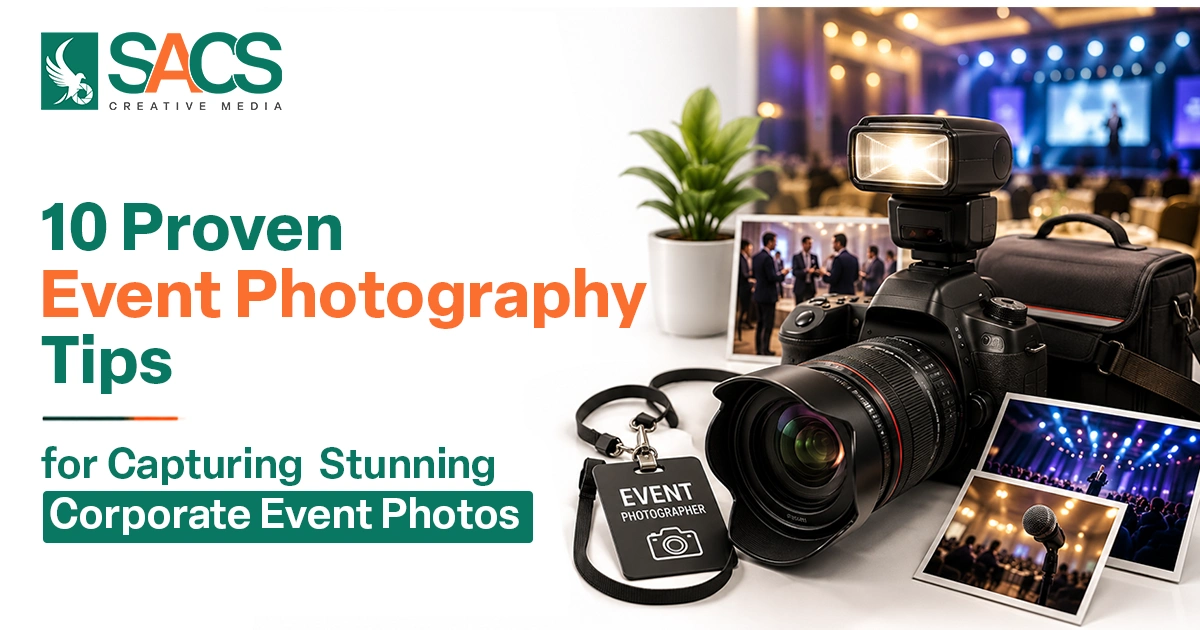
Event Photography Tips can help businesses get more value from every conference, exhibition, product launch, award ceremony, seminar, networking event, or corporate celebration. Professional event photos do more than record what happened. They can show company culture, highlight achievements, strengthen brand visibility, and provide useful content for marketing long after the event ends.
For businesses planning Event Photography in Dubai, choosing the right approach before the event can make a significant difference. A successful corporate photography session is not only about having a professional photographer at the venue. It is also about deciding what needs to be captured, identifying important people, preparing the location, communicating the brand message, and planning how the final photographs will be used.
For business owners and marketing teams, the goal should be simple: receive a collection of professional, natural, and useful photographs that represent the event and the brand accurately.
Whether you are organising a small company gathering or a large corporate conference, these practical Event Photography Tips will help you prepare for better coverage and get more value from your event photographs.
Here are the 10 Proven Event Photography Tips
1. Define What You Want the Photos to Achieve
Before hiring a photographer or preparing a shot list, think about why your business needs event photography. This is one of the most important corporate event photography tips because the purpose of the photographs should guide the entire project.
For example, your company may want photographs to:
- Promote future events
- Share updates on social media
- Support press releases
- Showcase company culture
- Highlight senior executives
- Promote products or services
- Document awards and achievements
- Update the company website
- Create marketing campaigns
- Build a visual library for future use
Knowing these goals helps you communicate your expectations clearly. If your main goal is social media, you may need a strong mix of vertical and horizontal photographs. If the images will be used for a company website, you may need wider photographs with enough empty space for website text and design elements.
A business should not simply ask for “good photos.” It is better to explain how the photographs will be used and what the company wants people to feel when they see them. This gives the photographer a clearer understanding of your brand and event.
2. Create a Simple Priority List Before the Event
Corporate events can be busy. Several activities may happen at the same time, and important guests may only be available for a short period. Creating a priority list is therefore one of the most practical Event Photography Tips for businesses. Before the event, identify the people and moments that must be photographed.
Your list could include:
- CEO or managing director
- Keynote speakers
- VIP guests
- Business partners
- Sponsors
- Award winners
- Employees
- Customers
- Product demonstrations
- Important presentations
- Team photographs
- Networking sessions
- Opening and closing moments
Share this list with the photography team before the event. This does not mean every photograph needs to be planned. Instead, it gives the photographer a clear understanding of what matters most to your company. For example, if a senior executive is attending for only one hour, the photographer should know in advance.
If your company is launching a new product during the event, that moment should also receive special attention. Good preparation reduces the risk of missing photographs that cannot be recreated later.
3. Make Sure Your Brand Is Visible Naturally
Corporate photography should represent your business without making every image look like an advertisement. Think about where your brand appears throughout the event. Your logo may be displayed on the stage, entrance backdrop, presentation screens, banners, exhibition booths, products, badges, or promotional materials. These elements can become part of the visual story.
Ask your photographer to capture photographs where branding appears naturally. For example, a speaker presenting in front of a branded screen can create a strong image for LinkedIn or a company website. A networking photograph near your exhibition booth can show both your team and your brand environment.
This is where Creative Photography Ideas can add value. Instead of simply photographing the logo directly, use the surrounding activity to show how people interact with your brand. The aim is to create photographs that feel authentic while still supporting brand recognition.
Businesses should also check the event setup before guests arrive. A crooked banner, damaged sign, empty boxes, or distracting objects can reduce the quality of otherwise good photographs. A quick visual check of the venue can make the final gallery look much more professional.
4. Ask for a Balance of Candid and Posed Photos
A strong corporate event gallery should not consist entirely of posed group photographs. Candid images are valuable because they show genuine interactions and the real atmosphere of an event. They can capture employees talking, guests networking, speakers interacting with attendees, teams celebrating, and customers engaging with a product.
At the same time, posed photographs still have an important role.
Businesses may need formal photographs of:
- Executives
- Speakers
- Award recipients
- Leadership teams
- Employees
- Sponsors
- Partners
- Special guests
The best approach is to combine both styles. When discussing photography tips for corporate events, businesses should ask for a balanced gallery that includes formal portraits, group photographs, candid interactions, event atmosphere, details, and key moments. This gives your marketing team more options after the event.
A candid image may work well for a social media post about company culture, while a professional executive portrait could be used on a website or LinkedIn profile.
5. Give Your Photographer a Clear Event Schedule
A detailed event schedule can make corporate photography much more effective. Your photographer should know when the keynote begins, when awards are presented, when the product launch happens, when VIP guests arrive, and when important group photographs are planned.
This is particularly important for large events where several activities happen across different areas. Send the schedule before the event rather than explaining everything at the last minute. Highlight the moments that are especially important to the business.
A schedule allows the photographer to prepare for each stage instead of reacting after an important moment has already happened. If the schedule changes during the event, make sure someone from your team communicates the update. Clear communication is one of the simplest ways to improve event coverage.
6. Give Attention to Employees and Company Culture
Businesses often focus heavily on executives and speakers and forget about the people who make the company work. Your employees are an important part of your corporate story. Photographs showing employees collaborating, welcoming guests, helping customers, participating in activities, or celebrating achievements can provide valuable content for recruitment, employer branding, social media, and internal communication.
These images can help potential employees understand the environment and personality of the company. They can also make corporate communication feel more human. When planning event photography, ask for coverage that represents different teams and levels of the organisation. This avoids creating a gallery that only features senior management. A good corporate event collection should show the wider business community.
7. Make Time for Important Group Photographs
Group photographs can be challenging when an event is busy, but they are often among the most requested images. If your business needs a leadership photograph, department photo, employee group picture, or sponsor photograph, plan it in advance.
Choose an appropriate location with enough space and good lighting. Avoid leaving group photography until the final few minutes of the event when people may already be leaving. Assign someone from your team to help gather the right people. This can save time and prevent confusion.
Take more than one photograph so you have options when someone blinks, looks away, or moves. Businesses should also consider how the photograph will be used. A large team photo may work well on an internal page, while a smaller leadership photograph may be more suitable for a website or corporate announcement. The clearer the purpose, the easier it is to plan the photograph.
8. Consider the Audience for Every Photograph
Not every corporate photograph needs to communicate the same message. Think about who will eventually see the images. A photograph used on LinkedIn may need to show professionalism and leadership. A social media post may benefit from a lively networking image.
A press release may require a clear photograph of the speaker or award presentation. A recruitment campaign may benefit from natural employee interactions. Understanding the audience helps your business request the right type of coverage.
This is an important part of the Roles of Photography in modern business communication. Corporate photographs can document events, support marketing, strengthen brand identity, communicate company culture, and provide visual proof of business activity.
Instead of treating the event gallery as one large collection, think about the different ways your business can use the photographs. This can help you get more value from the same event.
9. Plan How You Will Use the Photos After the Event
Taking photographs is only the first step. One of the most overlooked Event Photography Tips is to plan your content strategy before the event ends.
Your photographs can potentially be used for:
- LinkedIn posts
- Instagram content
- Website updates
- Blog articles
- Press releases
- Email newsletters
- Company presentations
- Annual reports
- Recruitment campaigns
- Future event promotions
- Internal communications
For example, a company could publish a short event recap on its website and use selected photographs throughout the article. The same event can then generate several LinkedIn posts featuring speakers, employees, award winners, or important announcements. This means one photography session can continue providing marketing value for weeks or months.
Organise the final images properly and keep high-resolution versions available for future use. It is also useful to separate photographs into categories such as speakers, guests, branding, networking, awards, teams, and venue images.
10. Choose Quality, Consistency, and Professional Delivery
The final consideration is the quality of the entire photography service. Businesses should not evaluate an event photographer only by looking at a few impressive images. Look at complete event galleries when possible. A professional gallery should show consistency across different lighting conditions, locations, people, and activities.
Ask about:
- Photography coverage time
- Number of photographers required
- Expected delivery timeline
- Image selection process
- High-resolution files
- Web-ready images
- Editing style
- Backup procedures
- Image usage rights
- Delivery format
These details can prevent misunderstandings after the event. One of the most useful corporate event photography tips is to discuss deliverables before signing an agreement. Knowing exactly what you will receive makes it easier to compare photography services and select an option that fits your business needs.
The cheapest option is not always the most cost-effective if important moments are missed or the final images are difficult to use. Look for a photography partner that understands business communication, not just photography.
Common Mistakes Businesses Should Avoid
Even with professional photography, poor preparation can affect the final results.
Not communicating priorities
If a VIP, product launch, award presentation, or executive meeting is particularly important, tell the photographer in advance.
Trying to photograph everything equally
Some moments have greater business value than others. A clear priority list helps focus attention where it matters.
Forgetting about branding
Check that important branded areas are clean, visible, and ready before guests arrive.
Only requesting posed photographs
Natural interactions often create more engaging content and help show the real atmosphere of an event.
Leaving group photos until the last minute
Plan group photographs around the event schedule and make sure the right people are available.
Not thinking about future content
Before the event, consider where the photographs will be published and what formats your marketing team may need.
Choosing based only on price
Photography quality, experience, communication, reliability, and delivery should all be considered when selecting a service.
How to Choose the Right Event Photography Partner
Choosing the right photography company is just as important as planning the event itself. Start by reviewing relevant corporate event galleries and look for consistent quality across complete event coverage rather than only a few highly edited portfolio images.
At SACS Creative Media, we focus on understanding your event goals, schedule, priority guests, branding requirements, and expected deliverables before the event begins. This helps us capture the moments that matter most to your business while keeping the photography natural and professional.
We also recommend discussing the type and amount of coverage you need. A large conference with multiple rooms and simultaneous sessions may require more photographers than a small executive gathering or product launch. Clear communication about these requirements helps ensure important moments are not missed.
Finally, discuss delivery timelines, image formats, editing, and usage requirements before the event. We aim to make the process straightforward for your team while providing professional photographs that can be used across your website, social media, PR, and other marketing channels.
How Businesses Can Get More Value From Corporate Photography
The Benefits of Corporate Photography go beyond simply having a record of an event. Professional images can strengthen a company’s online presence, provide content for marketing campaigns, highlight employees and leadership, support public relations, and show potential customers that the business is active and established.
A well-planned photography session can also reduce the need to organise separate photo shoots for every small marketing requirement. For example, an event may produce professional photographs of executives, employees, customers, products, branding, venue spaces, and business activities. These images can later support different communication channels. The key is to think beyond the event itself.
Ask: “How can we continue using these photographs after the event?”
That question can change the way your business plans photography from the beginning.
Conclusion
The best corporate event photographs do not happen by accident. They come from clear goals, good preparation, communication, and a strong understanding of the business. These Event Photography Tips can help companies prepare more effectively, communicate their expectations, and make sure the final images support both the event and wider marketing goals.
Start by defining what you want the photographs to achieve. Create a priority list, share the event schedule, identify important people, prepare branded areas, and request a healthy mix of candid and formal images. Most importantly, think about what happens after the event.
Your corporate photographs can become valuable marketing assets long after guests have gone home. With the right planning and professional coverage, one event can provide a large collection of useful images that help your business tell its story, showcase its people, promote its achievements, and strengthen its brand.
That is what makes professional event photography more than simple documentation. It becomes a practical part of your company’s marketing and communication strategy.